Another €45 billion.
Not a typographical error. Not a speculative forecast. Another €45 billion proposed by the European Commission on 18 November 2026 for Ukraine in 2027, on top of the €90 billion loan programme already in place for 2026–2027. The Commission says the latest proposal will help fill a financing gap estimated at €70 billion next year. The proposal is not yet money disbursed. But it is money Europe is preparing to borrow.
At these altitudes, billions become strangely weightless. They float through press conferences and summit communiqués. The public is asked to admire the resolve, applaud the solidarity and refrain from counting too closely. One might reasonably ask whether Europe's political vocabulary has become a substitute for its political destination.
Why is Europe STILL supporting Ukraine? And what, exactly, is Europe buying?
I. THE EUROPEAN CONVICTION
There is an official answer, repeated with near-liturgical regularity: sovereignty, international law, European security. Russia invaded Ukraine. Ukraine has the right to defend itself. Europe, say its leaders, cannot afford to see armed aggression rewarded. These are serious arguments; they cannot be disposed of with a sarcastic flourish.
But the seriousness of a principle does not relieve those who invoke it of the obligation to explain their strategy. Is Europe helping Ukraine defend territory, preparing the ground for negotiation, deterring a future Russian assault on NATO, or underwriting an indefinite confrontation? These objectives overlap. They are not interchangeable. None can be evaluated without a definition of success.
In Brussels, the official language has sometimes acquired the grandiosity of a morality play. Putin is the monster. Russia becomes, in the public imagination, the permanently menacing bear. Those who question the chosen instruments of policy may find their questions mistaken for sympathy with Moscow. Such habits of debate are poor substitutes for evidence.
We should be perfectly capable of condemning Russia’s invasion while examining the way Western governments describe it. To understand an opponent is not to excuse him. To interrogate Europe’s choices is not to abandon Ukrainians. It is to insist that governments account for the policies they pursue in our name.
Ursula von der Leyen is not an elected national head of government: the European Commission president is nominated by the European Council and elected by the European Parliament. That gives the office an institutional mandate, but one very different from the direct popular mandate of a president elected by citizens. Democratic accountability is not a trivial detail when financial obligations grow so large.
The question of accountability extends beyond Brussels. Ursula von der Leyen, NATO Secretary-General Mark Rutte, German Chancellor Friedrich Merz and French President Emmanuel Macron have made continued support for Ukraine a prominent part of Europe's political agenda. They defend that policy as necessary for Ukraine's security and Europe's own. Yet the prominence of the war also invites an uncomfortable domestic question. France faces fiscal and political pressures; Germany struggles with industrial competitiveness; households across Europe confront housing costs and strained public services. Is the external emergency absorbing political attention that should also be directed towards these problems? It would be speculation to assert that these leaders want the war prolonged in order to escape domestic scrutiny. Their stated aim is a durable peace. But it is neither unreasonable nor disloyal to insist that their commitment abroad be accompanied by clear accountability at home. Europe has responsibilities on both fronts, and citizens should not have to choose which questions they are permitted to ask.
The Ukrainian government's appeal for help is understandable. It is Europe's responsibility, however, to decide why it answers that appeal, how much it commits, and what evidence would cause it to change course. That responsibility cannot be delegated to Kyiv, Washington or any television camera trained upon a summit podium.
II. THE ROAD TO WAR
Before the grand declarations and enormous invoices came 2013. President Viktor Yanukovych suspended preparations for an association agreement with the European Union after months of competing pressure from Brussels and Moscow. The decision helped trigger Euromaidan. By February 2014, the demonstrations, the repression and the violence had brought Ukraine to a political rupture.
Yanukovych left Kyiv; parliament voted to remove him. The constitutional procedure remains contested. Washington was no silent spectator. In the leaked Nuland–Pyatt conversation, senior American diplomats discussed possible configurations for a future Ukrainian government. That is evidence of attempts to influence the transition. It is not public proof that the CIA orchestrated the uprising. Circumstance invites investigation; it does not automatically deliver a verdict.
Russia then seized and annexed Crimea, and war took hold in the Donbas. The first Minsk agreement arrived in September 2014, the second in February 2015. Ceasefire, heavy-weapons withdrawal, political arrangements, elections, border control: the promises were extensive. The implementation was not. The agreements became documents that everybody could cite and nobody could make work.
Was Minsk a genuine peace effort undone by incompatible demands? A diplomatic holding operation? A piece of paper waved before Putin the Kraken until the next storm? The temptation to choose the most theatrical answer is considerable. The documents themselves require a less convenient examination: repeated violations, deep disagreements over sequencing, and insufficient means to secure compliance.
Behind Minsk stood a larger security quarrel. Russia had objected for years to NATO's eastward enlargement. In December 2021 Moscow put demands in writing: no further enlargement, including Ukraine, and restrictions on military activity in parts of Eastern Europe. NATO maintained that independent countries were entitled to choose their alliances. Both positions describe a political reality. Neither resolves the other.
Moscow says it does not intend to invade NATO countries. Its invasion of Ukraine gives neighbours reason not to take verbal assurances as guarantees. Equally, predictions of a Russian march across Europe should be examined against actual capabilities and intentions, rather than treated as a compulsory article of faith. Russia's security claims explain part of the dispute; they do not justify the use of force against Ukraine.
It is remarkable how quickly historical complexity can disappear when a conflict acquires its official heroes and villains. Putin is not the whole of Russia, and Russia is not Putin. Russian citizens, culture and history do not vanish because their government wages war. Europe will eventually have to deal with Russia as a country, not merely as an image on a poster.
III. THE POLITICS OF SURVIVAL
Enter Volodymyr Zelenskyy: the television comedian who played a president before becoming one. He won the 2019 election decisively. After Russia's full-scale invasion in February 2022, the entertainer became a wartime communicator of extraordinary reach. Churchill comparisons followed. Foreign parliaments applauded. Military-style clothing turned into an internationally recognised costume of office.
The Wartime Entertainment Leader is a deliberately uncomfortable description. Political theatre matters in war: images move publics, speeches unlock arsenals, and a persuasive appeal can produce money faster than an ordinary budget memorandum. Zelenskyy has been remarkably effective at obtaining foreign attention and support. That success is not the same as a comprehensive political strategy for peace.
A leader who personifies a cause can become difficult to question. Criticism of one man's decisions is recast as disloyalty to an entire country. Yet Ukraine is not Zelenskyy, just as Russia is not Putin. A nation must outlive its spokesman.
Under martial law, Ukraine has not held its scheduled national elections. That raises questions about democratic accountability and what will follow the war. It does not prove that the president prolongs the fighting to save his office, still less that his personal safety explains the war's duration. The contention is serious enough to investigate, not serious enough to announce without evidence. Meanwhile, other obstacles to a settlement include Russian demands, the territorial dispute, security guarantees and the sequencing of any ceasefire.
Churchill himself lost an election in 1945. A wartime image is no guarantee of a peacetime mandate. The public will one day be entitled to judge Zelenskyy's record without the wartime spotlight deciding the verdict beforehand.
Then there is the ledger. Where have the American and European billions gone? This is neither a rhetorical flourish nor an accusation that every appropriation hides a scandal. It is an elementary request for accounts.
U.S. oversight authorities report $198.59 billion appropriated or otherwise made available for the wider Ukraine response through September 2026; $127.03 billion had been disbursed. Those figures include U.S. operations and expenditures outside Ukraine. They are not a receipt signed by the Ukrainian treasury. The Council’s earlier published breakdown shows €237.6 billion mobilised across military measures, financial support and guarantees, assistance to refugees within Europe, member-state contributions and proceeds connected to immobilised Russian assets. Following a further disbursement on 20 November 2026, the European Commission reported an updated cumulative support figure of €245.5 billion.
One government's aid is another company's order book. Some expenditure pays defence manufacturers in donor countries. Some replaces weapons stocks. Some pays Ukrainian teachers and pensioners. Some supports refugees housed in Europe. Each use may have its rationale. But the headline totals conceal important differences between loans and grants, promises and deliveries, expenditure in Ukraine and expenditure because of Ukraine.
Before the next billion is announced, show the public the invoice, the recipient and the result.
There is no need to manufacture a conspiracy when a straightforward audit is already an interesting story. If a hundred billion is invoked to win an argument, we should be entitled to ask whether it has been appropriated, contracted, disbursed or actually delivered—and to whom. The documentary ledger follows this essay so that the reader can inspect the categories rather than swallow a single swollen total.
Europe also has obligations at home. Housing pressures, strained services and tight public budgets are not imaginary simply because a war is raging elsewhere. Nor does every euro spent on Ukraine correspond to a euro removed from a school or hospital: public finance is more complicated than that. The trade-offs nevertheless deserve open parliamentary debate, not automatic moral suspicion of dissent.
Nor is a declaration in favour of peace the same thing as a demonstrated route to peace. European representatives joined consultations in Abu Dhabi on 10 November 2026, and European leaders reaffirmed their support for negotiations in Berlin on 19 November, including proposals for limited ceasefires. These initiatives matter and should be acknowledged. But they do not, by themselves, resolve the incompatible demands over territory, sovereignty and security guarantees. After years of fighting and successive financial commitments, Europe owes its citizens more than another appeal to resolve: it owes them a candid explanation of what diplomatic outcomes it is seeking, what compromises it considers possible, and how military support is intended to advance negotiations rather than become an indefinite policy in its own right. Russia and Ukraine must decide whether to accept any settlement; European leaders cannot decree one. They can, however, be held accountable for the clarity and seriousness of their own strategy. That is the political question behind the next appropriation: not merely how much Europe will pay, but what end its governments are working towards.
IV. THE FISH OUT OF WATER
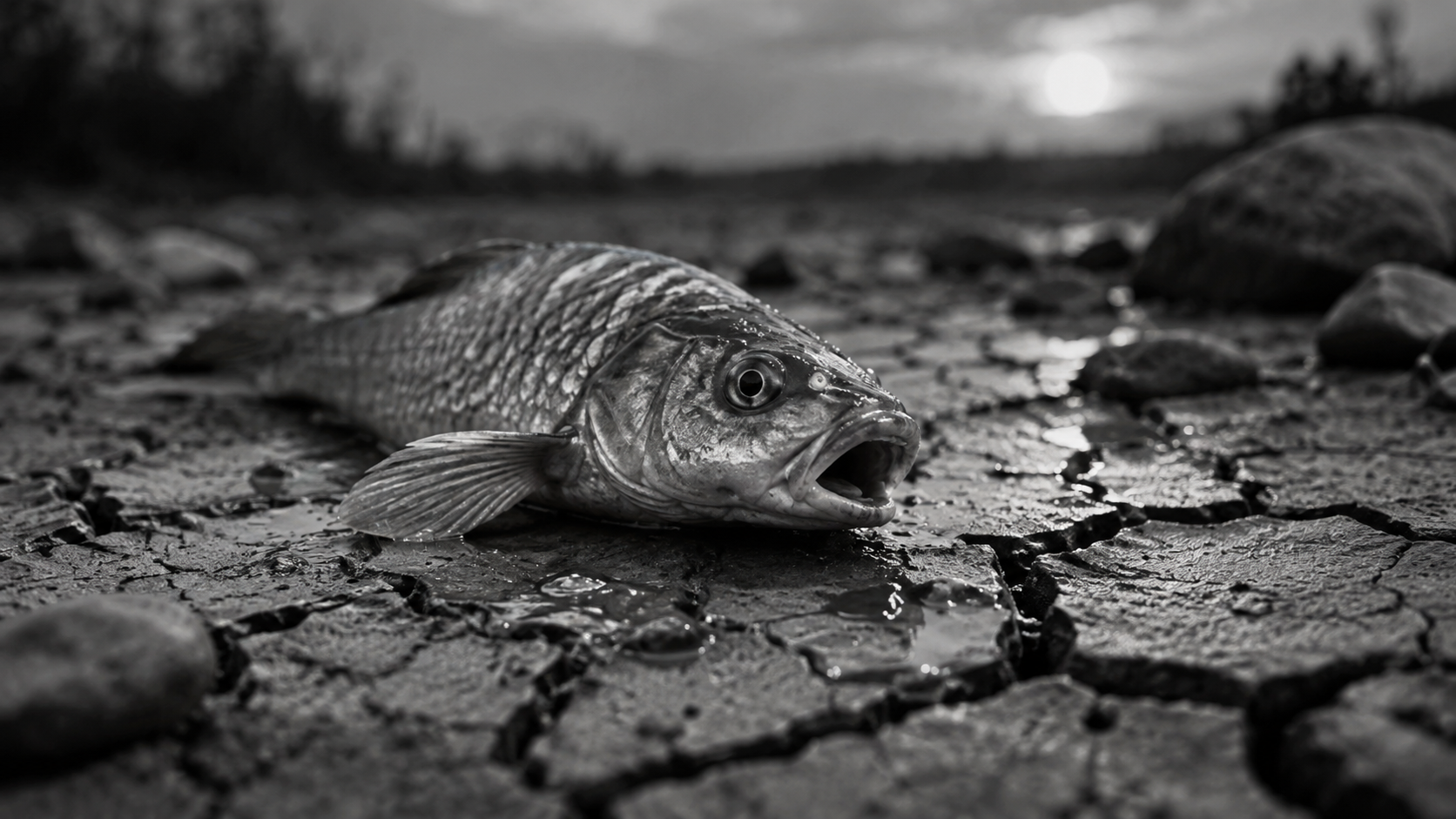
Imagine a fish stranded on dry land. Its gills still move. Its mouth opens. Someone throws water over it. For another moment it lives. Someone else arrives with another bucket. Then another. The scene is repeated, year after year, at a mounting price.
Perhaps those buckets matter. Perhaps without them the fish dies. That possibility must be faced, not mocked. Yet the person administering the next splash ought to be asked a different question: where is the river?
Ukraine needs the capacity to protect its population and the possibility of a future in which daily existence is not an international emergency. Europe needs a strategy explaining how defence assistance, diplomacy, credible security arrangements and reconstruction might contribute to that future. The terms of a settlement remain difficult precisely because Russia and Ukraine have incompatible positions on territory and security. No financial instrument can dissolve those differences.
It is possible to regard Ukrainian resistance as necessary and still question whether Europe has defined the political end to which its aid is directed. It is possible to fear Russian power without treating every Russian statement as a declaration of continental conquest. It is possible to find Zelenskyy an effective performer without conferring upon him the monopoly of Ukrainian interests.
The problem with grand moral narratives is that they make excellent speeches and poor balance sheets. Europe should state the objectives, disclose the spending, evaluate the results and confront the diplomacy. Otherwise, each new appropriation risks becoming less a policy than a ritual.
Another €45 billion. Another solemn announcement. Another bucket.
The fish does not need Europe to become more accomplished at pouring water. It needs someone to confront the difficult, dangerous question of how to return it to the river.
DOCUMENTARY ANNEX | FOLLOW THE MONEY
Funding figures reported by the cited institutions; unlike-for-unlike categories are not to be combined into one grand total.
UNITED STATES — Wider Ukraine response, 30 September 2026. The U.S. Lead Inspector General reports $198.59 billion made available, including $4.89 billion from NATO allies and partners. Funding status: $127.03 billion disbursed; $60.71 billion obligated, not yet disbursed; $4.25 billion available for obligation; $5.18 billion expired; and $1.42 billion under review. These are U.S. programme accounting figures, not total cash transferred to Ukraine.
| U.S. purpose (made available) | USD billions |
|---|---|
| Security and related programmes | 143.65 |
| Governance and development | 46.14 |
| Humanitarian assistance | 5.00 |
| Agency operations and oversight | 3.80 |
| TOTAL | 198.59 |
EUROPE — The Council’s published breakdown, reflecting its earlier reporting position, totals €237.6 billion mobilised by the EU and its member states. It covers budget resources and guarantees, military measures, assistance to refugees within the EU, member-state contributions and proceeds from immobilised Russian assets. On 20 November 2026, the European Commission announced a further disbursement of €7,859,441,144 and stated that overall EU and member-state support since 2022 had reached €245.5 billion. Neither total represents a single transfer to Kyiv; the categories also differ in their financing and accounting treatment.
| European support category | EUR billions |
|---|---|
| EU budget resources and guarantees | 123.4 |
| Military measures | 77.9 |
| Refugee support within EU | 17.0 |
| Individual member-state support | 15.5 |
| Proceeds from immobilised Russian assets | 3.8 |
| TOTAL | 237.6 |
| EU support: published-total reconciliation | EUR billions |
|---|---|
| Council’s earlier total (five categories above) | 237.6 |
| Commission payment on 20 November 2026 (rounded) | +7.9 |
| Commission’s cumulative reported total, 20 November 2026 | 245.5 |
RECONCILIATION NOTE — The €7.9 billion figure is the Commission’s €7.859 billion payment rounded to one decimal place. The displayed bridge reconciles the published totals at that precision; it does not constitute an audited redistribution of the new payment among the Council’s five earlier categories. The €45 billion proposal for 2027 is prospective and must not be added to these cumulative support figures. EU totals also must not be added mechanically to U.S. totals, as definitions and accounting treatments differ.
The existing EU €90 billion Ukraine Support Loan for 2026–2027 has an indicative division of €60 billion for military assistance and €30 billion for economic support. On 18 November 2026 the Commission separately proposed an additional €45 billion for 2027: up to €25 billion for military needs and €20 billion for budget support. The latter €45 billion is a legislative proposal, not a completed disbursement.
SELECTED PRIMARY DOCUMENTS
European Commission, “Commission disburses €7.9 billion to strengthen Ukraine’s financial stability and advance reform efforts,” 20 November 2026. https://enlargement.ec.europa.eu/news/commission-disburses-eur79-billion-strengthen-ukraines-financial-stability-and-advance-reform-2026-11-20_en
European Commission, “Commission proposes €45 billion in additional financial support for Ukraine in 2027,” 18 November 2026. https://enlargement.ec.europa.eu/news/commission-proposes-eur45-billion-additional-financial-support-ukraine-2027-2026-11-18_en
U.S. Lead Inspector General, Operation Atlantic Resolve, Quarterly Report, July–September 2026. https://www.stateoig.gov/uploads/report/report_pdf_file/oar_q4_sep2026.pdf
Council of the EU, “EU solidarity with Ukraine.” https://www.consilium.europa.eu/en/policies/eu-solidarity-ukraine/
Council of the EU, “EU financial assistance to Ukraine.” https://www.consilium.europa.eu/en/policies/ukraine-solidarity-financial-support/
Council of the EU, “Statement on meeting in Abu Dhabi between the EU, France, Germany, Italy, UK, Ukraine, US and NATO,” 10 November 2026. https://www.consilium.europa.eu/en/press/press-releases/2026/11/10/statement-on-today-s-meeting-in-abu-dhabi-between-the-eu-france-germany-italy-united-kingdom-ukraine-united-states-and-nato/
Joint statement by the leaders of Germany, France, the United Kingdom and Ukraine, Berlin, 19 November 2026. https://president.gov.ua/en/news/spilna-zayava-lideriv-nimechchini-franciyi-velikoyi-britaniy-107409
UN Security Council Resolution 2202 (2015), endorsing the Minsk Package of Measures. https://digitallibrary.un.org/record/787968
© 2026 Michelle Boos. All rights reserved.
← Back to Réflexions